Automated HVAC System Fault Alarms and Rapid Response: Enhancing Reliability and Operational Efficiency
- Share
- Issue Time
- Feb 24,2026
Summary
Automated HVAC fault alarm systems provide real-time monitoring, immediate alerts, and proactive maintenance. They can reduce downtime, improve energy efficiency, and enhance the overall reliability and operational performance of buildings.
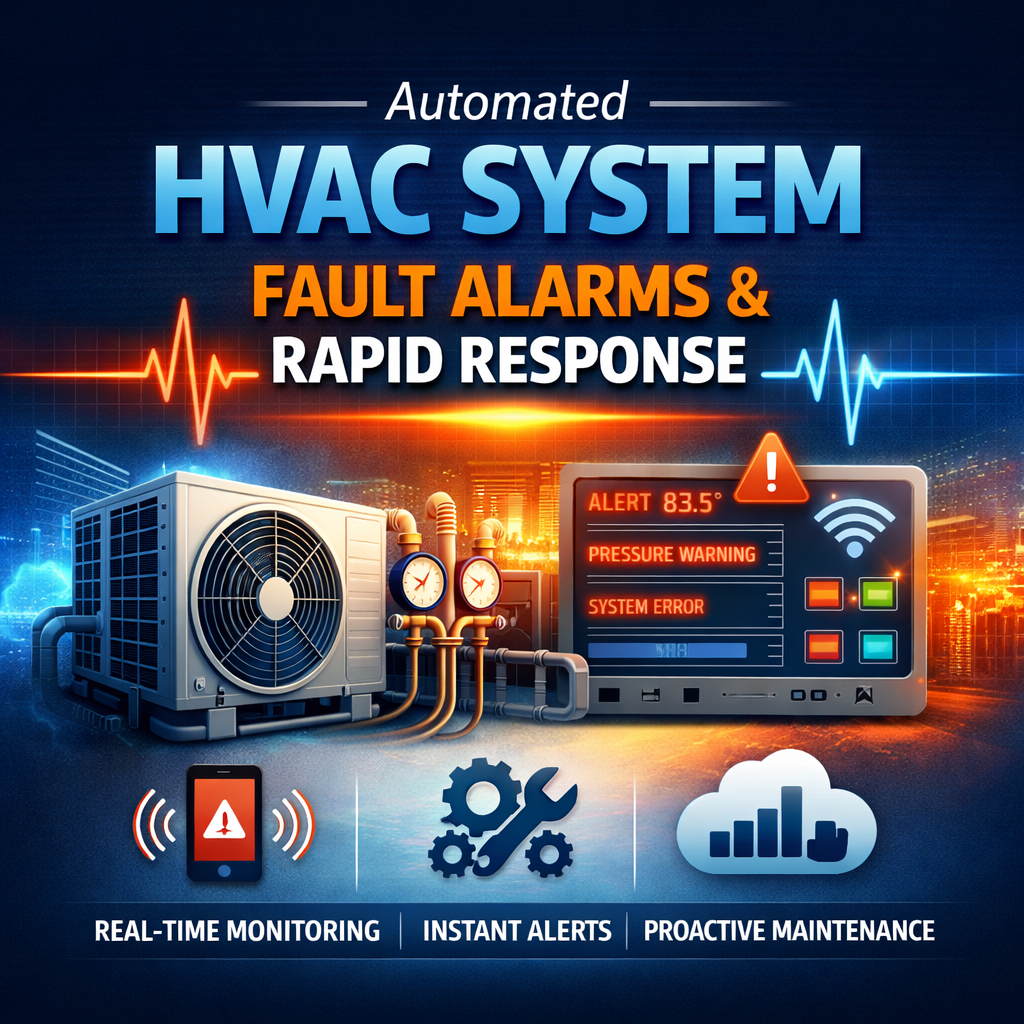
In today's commercial and industrial buildings, HVAC systems are crucial for maintaining indoor comfort, air quality, and operational stability. Whether in office buildings, manufacturing plants, hospitals, or data centers, even minor system failures can lead to energy waste, costly downtime, or equipment damage.
Automated HVAC fault alarm systems, combined with rapid response strategies, offer a smarter and more reliable way to manage complex heating, ventilation, and air conditioning infrastructure.
The Importance of Automated Fault Detection in HVAC Systems
Traditional maintenance methods rely heavily on periodic inspections or reactive repairs after a failure occurs. This approach typically leads to:
● Delayed fault detection
● Extended equipment downtime
● Increased labor costs
● Shortened system lifespan
Automated HVAC monitoring systems continuously track key operating parameters, such as:
● Supply and return air temperatures
● Pressure differential
● Compressor and fan performance
● Current load
● Refrigerant system status
● Airflow
When abnormal values exceed preset thresholds, the system immediately issues alerts via email, SMS, or an integrated building management platform, enabling facilities teams to take timely action.
Core Components of an Automated HVAC Fault Alarm System
1. Smart Sensors
High-precision sensors installed at critical control points collect system operation data in real time.
2. Advanced Controllers (PLC/DDC)
Programmable Logic Controllers (PLCs) or Direct Digital Controllers (DDCs) analyze input data and perform logic-based diagnostics to detect anomalies.
3. Building Automation System (BAS) Integration
Through integration with a Building Automation System (BAS), operators can view system performance, manage alarms, and adjust control strategies from a centralized interface.
4. Remote Monitoring and Cloud Connectivity
Cloud platforms provide multi-site monitoring, mobile access, and centralized data storage, thereby accelerating decision-making and improving coordination.
How Rapid Response Reduces Downtime
The true value of automation lies not only in detecting faults—but in resolving them quickly.
Accurate Fault Identification
Historical data logging and trend analysis allow technicians to pinpoint root causes, significantly reducing troubleshooting time.
Remote Troubleshooting and Adjustment
Many operational issues can be resolved remotely by adjusting parameters, resetting systems, or modifying control logic—saving both time and service costs.
Automated Maintenance Workflow
Alarm-triggered work order generation streamlines maintenance management and ensures no issue goes unnoticed.
Predictive Maintenance Capabilities
Data-driven analytics help predict component wear and performance degradation, enabling proactive servicing before failures occur.
Key Benefits for Commercial and Industrial Facilities
| Advantage | Operational Impact |
Faster Fault Detection | Immediate alerts minimize disruption |
Reduced Downtime | Quick intervention limits operational loss |
| Lower Maintenance Costs | Targeted and efficient servicing |
| Improved Energy Efficiency | Early correction of abnormal operation |
| Enhanced Equipment Lifespan | Preventive maintenance extends system durability |
Application Scenarios
Automated HVAC fault alarm and rapid response systems are particularly important in the following locations:
● Commercial office buildings
● Hospitals and laboratories
● Industrial production facilities
● Data centers
● Hotels and retail complexes
In mission-critical environments such as healthcare facilities and data centers, real-time monitoring and rapid intervention are crucial for maintaining security and business continuity.
Future Outlook: Intelligent and Self-Optimizing HVAC Systems
With the convergence of IoT technology and artificial intelligence, HVAC systems are moving beyond simple monitoring:
● AI-driven diagnostics
● Self-learning optimization algorithms
● Cross-platform data integration
● Advanced predictive analytics
These innovations are transforming HVAC management from reactive maintenance to fully intelligent, proactive system control.
Conclusion
Automated HVAC system fault alarms and rapid response strategies are fundamental to modern building management. They ensure operational continuity, reduce maintenance costs, and improve energy efficiency across commercial and industrial environments.
At Aurashu, we specialize in advanced HVAC control and automation solutions designed to deliver reliable monitoring, fast fault detection, and intelligent system optimization—helping businesses build smarter, safer, and more energy-efficient facilities.