New Applications of Heat Pumps in Industrial and Commercial Buildings
- Share
- Issue Time
- Feb 28,2026
Summary
Heat pumps are transforming energy efficiency in industrial and commercial buildings. By providing cost-effective heating, cooling, and hot water, they reduce energy consumption, emissions, and operational costs.
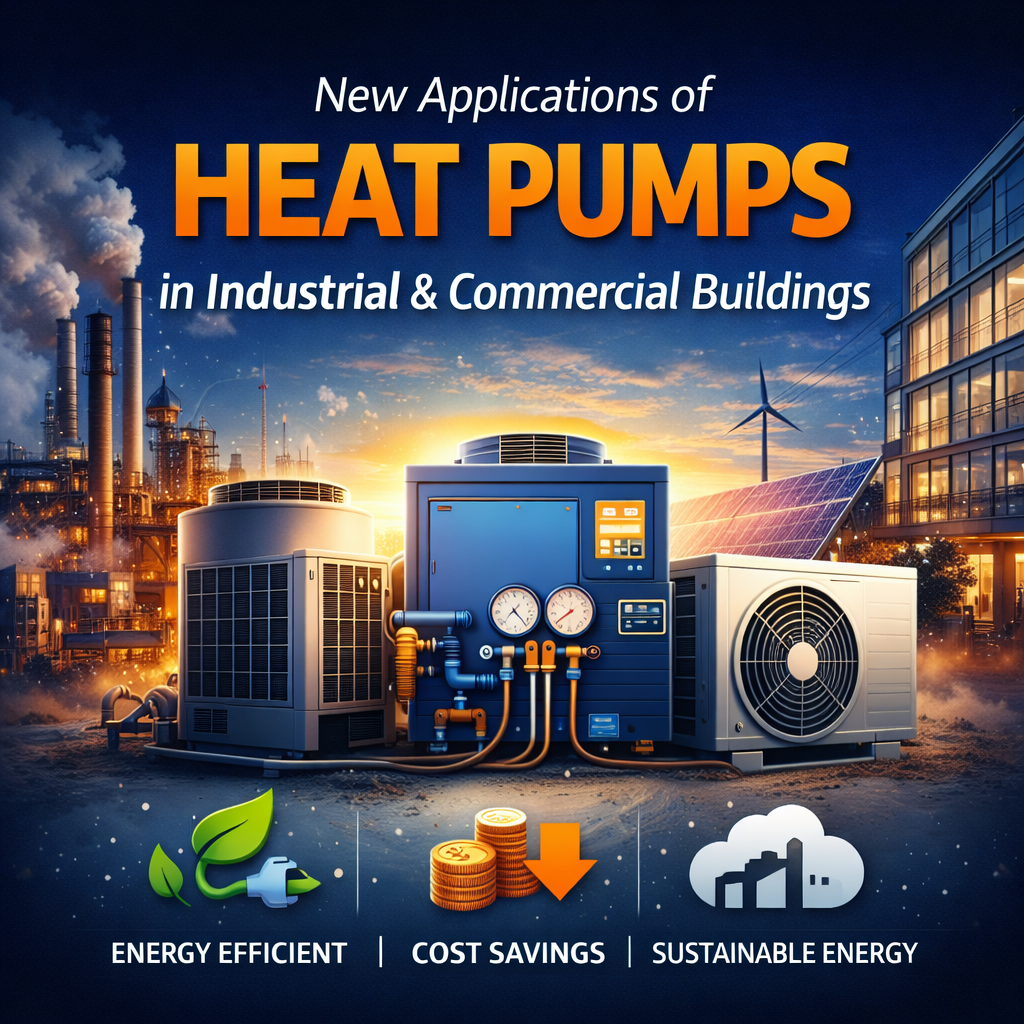
With increasing emphasis on energy efficiency in industrial and commercial sectors, heat pumps are gaining attention for their versatility and sustainability. Unlike traditional heating or cooling systems, modern heat pumps can provide both heating and cooling simultaneously, consuming less electricity and emitting fewer greenhouse gases. Their application in industrial processes and commercial building operations can significantly reduce energy and costs.
Why Heat Pumps Are Ideal for Industrial and Commercial Use
Heat pumps work by transferring heat rather than generating it, making them more efficient. Key advantages include:
● Energy efficiency: 3-4 times more energy efficient than resistance heating systems.
● Dual function: The same system can provide both heating and cooling.
● Reduce carbon emissions: When used in conjunction with renewable energy sources, carbon emissions can be reduced.
● Wide range of applications: Suitable for office buildings, factories, warehouses, hotels, hospitals, and other similar locations.
Innovative Applications in Industrial Sector
Process Heating and Cooling
Heat pumps can provide hot water or process heat for industrial production, thereby reducing reliance on fossil fuels. Some modern systems can also recover waste heat from machinery or exhaust gases to improve overall efficiency.
District Heating Integration
Industrial sites can integrate heat pumps into district heating networks to optimize energy use across multiple facilities and provide stable, cost-effective heating.
Waste Heat Recovery from Refrigeration Systems
Large refrigeration systems in factories, food processing plants, and cold storage facilities can be used in conjunction with heat pumps to recover waste heat to meet hot water or space heating needs.
Innovative Applications in Commercial Buildings
1、Heating and Cooling Spaces
Heat pumps efficiently maintain indoor comfort in offices, hotels, retail spaces, and hospitals while minimizing energy consumption.
2、Hot Water Supply
Commercial kitchens, laundry rooms, and hotels can utilize heat pumps for an efficient and sustainable supply of hot water.
3、Hybrid Systems
Combining heat pumps with solar or geothermal energy creates hybrid systems that further reduce operating costs and environmental impact.
Advantages of Heat Pump Integration
| Advantage | Operational Impact |
| Reduced Energy Costs | Less electricity use compared to conventional systems |
Lower Carbon Emissions | Environmentally friendly heating and cooling |
| Improved System Reliability | Modern heat pumps are robust and low-maintenance |
Space Savings | Compact design fits small mechanical rooms |
| Flexibility | Can be retrofitted or installed in new construction |
Future Trends
● Ground Source Heat Pumps: Achieve ultra-high efficiency by utilizing stable underground temperatures.
● Intelligent Control: Integrate with building automation systems to optimize energy use in real time.
● Industrial Heat Pump Networks: Connect multiple facilities or processes to achieve energy sharing and cost reduction.
With increasingly stringent regulations and sustainability becoming a competitive advantage, heat pumps are poised to become a core technology in industrial and commercial HVAC design.
Conclusion
Heat pumps offer industrial and commercial buildings a cost-effective, energy-efficient solution for heating, cooling, and hot water. By embracing this technology, businesses can reduce energy consumption, cut operational costs, and move toward greener, more sustainable operations.
Aurashu specializes in advanced HVAC solutions, including high-performance heat pump systems, helping industrial and commercial clients achieve smarter, energy-efficient buildings.