Waste Heat Recovery Applications in Large Commercial HVAC Systems
- Share
- Issue Time
- Mar 14,2026
Summary
Discover how waste heat recovery systems improve energy efficiency in large commercial HVAC applications. Learn about heat recovery technologies, benefits, and design strategies for modern buildings.
Waste Heat Recovery Applications in Large Commercial HVAC Systems
Energy efficiency has become a key consideration in modern building design. Large commercial buildings, such as shopping malls, hospitals, office buildings, and airports, consume significant amounts of energy for heating, cooling, and ventilation. With rising energy costs and increasingly stringent sustainability requirements, waste heat recovery technology is playing an increasingly important role in commercial HVAC systems.
By capturing and reusing heat that would otherwise be lost, waste heat recovery can significantly reduce energy consumption while improving the overall performance of HVAC systems.
Understanding Waste Heat in Commercial HVAC Systems
In large commercial buildings, HVAC equipment generates significant amounts of heat during operation. This heat is typically released into the environment through cooling towers, exhaust systems, or condensers.
Common sources of recoverable waste heat include:
● Heat generated by chiller condensers
● Exhaust gases from ventilation systems
● Heat generated by data center cooling systems
● Heat generated by refrigeration equipment
● Heat generated by industrial processes within commercial facilities
Modern HVAC systems capture this heat and reuse it for other building uses instead of releasing it outdoors.
Key Waste Heat Recovery Technologies
Several technologies are widely used to recover and reuse heat in commercial HVAC systems.
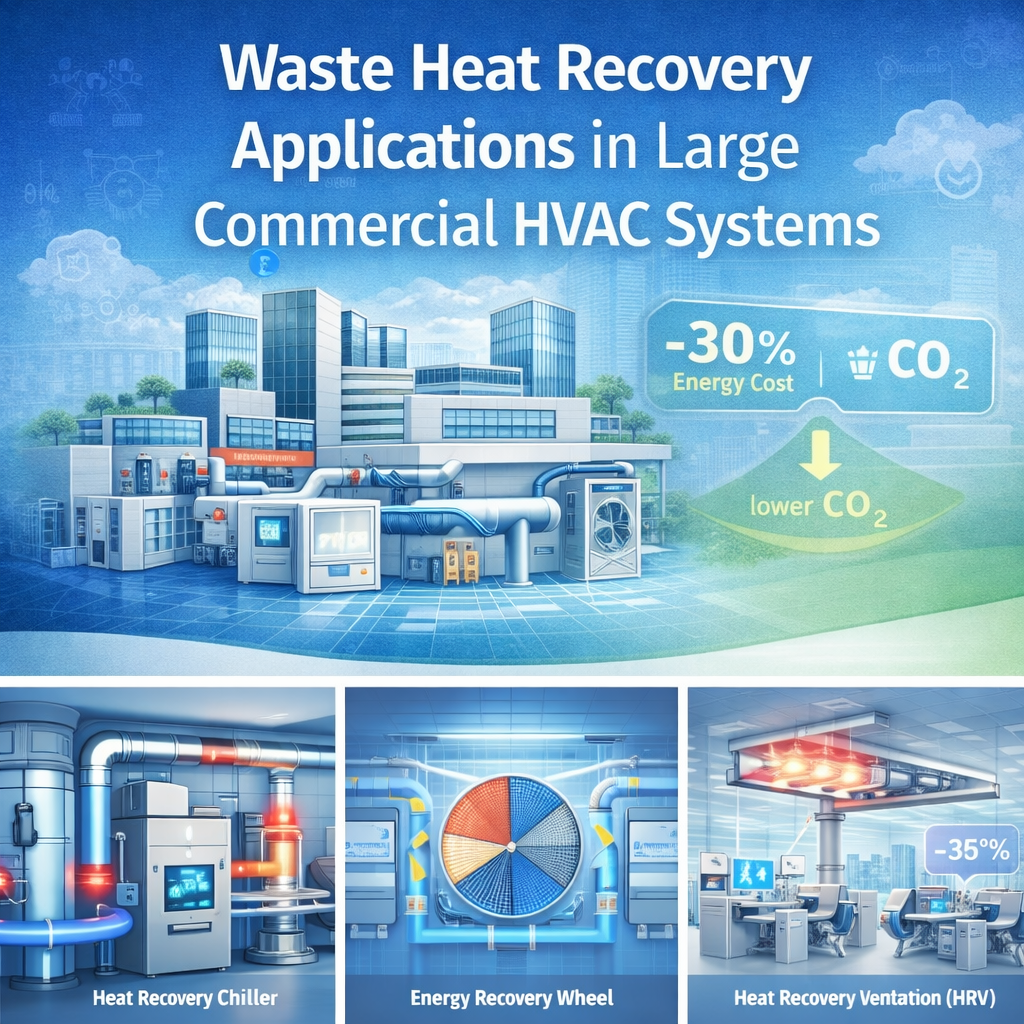
Heat Recovery Ventilation (HRV) Systems
Heat recovery ventilation systems utilize the heat exchange between exhaust gases and incoming fresh air. In winter, the system recovers heat from the exhaust gases and uses this heat to preheat the fresh outdoor air entering the building.
Its advantages include:
● Reduced heating energy consumption
● Improved indoor air quality
● Reduced HVAC operating costs
● Heat recovery ventilation systems are commonly used in office buildings, hospitals, and large public facilities.
Energy Recovery Wheels
Energy recovery wheels (also known as enthalpy wheels) exchange heat and moisture between exhaust and supply airflows. These rotating heat exchangers improve thermal efficiency and humidity control.
Their advantages include:
● High heat transfer efficiency
● Better humidity balance
● Reduced load on cooling and heating equipment
Energy recovery wheels are particularly effective in buildings with high ventilation requirements.
Heat Recovery Chillers
Heat recovery chillers can recover heat from the condenser during the cooling process and use it for the following heating applications:
● Domestic hot water supply
● Space heating
● Swimming pool heating
This technology enables buildings to provide both cooling and heating using a single system, significantly improving energy efficiency.
Run-Around Coil Systems
Circulating coil systems utilize fluid loops to exchange heat between physically isolated exhaust and supply air streams. This solution is particularly ideal when direct airflow connection is not possible.
These systems are commonly used in:
● Hospitals
● Laboratories
● Industrial facilities
Circulating coil systems provide flexible heat recovery solutions while meeting stringent air separation requirements.
Benefits of Waste Heat Recovery in Commercial Buildings
Integrating waste heat recovery into HVAC design provides several important advantages.
Reduced Operating Costs
Lower energy consumption directly translates to lower utility costs. For large commercial facilities, waste heat recovery offers significant long-term energy savings.
Enhanced Sustainability and Reduced Carbon Emissions
Many countries are implementing stricter building energy efficiency standards and carbon reduction targets. Waste heat recovery helps buildings achieve these sustainability goals by reducing overall energy demand.
Improved HVAC System Performance
Recovering waste heat reduces the load on heating and cooling equipment, thereby extending equipment lifespan and reducing maintenance needs.
Design Considerations for Heat Recovery Systems
When implementing waste heat recovery in commercial HVAC systems, engineers must consider the following key factors:
● Building ventilation requirements
● Climate conditions
● Available heat sources
● HVAC system configuration
● Ease of maintenance
Proper system integration is crucial to ensuring the efficient and reliable operation of waste heat recovery technology.
Applications in Modern Commercial Buildings
Waste heat recovery systems are widely used in various commercial buildings, including:
● Office buildings
● Shopping malls
● Hospitals and medical institutions
● Hotels and resorts
● Airports and transportation hubs
● Data centers
These facilities typically require large amounts of HVAC equipment, making waste heat recovery solutions an ideal choice.
Future Trends in HVAC Heat Recovery
With the continuous development of energy efficiency standards, waste heat recovery technology is expected to become increasingly important.
Future development directions may include:
● AI-based HVAC optimization systems
● Integration with heat pump technology
● Advanced heat exchanger materials
● Smart building energy management platforms
These innovations will further improve the efficiency and flexibility of commercial HVAC systems.
Conclusion
Waste heat recovery is an effective strategy for improving the performance and sustainability of large commercial HVAC systems. By capturing and reusing energy that would otherwise be lost, building operators can significantly reduce energy consumption, operating costs, and environmental impact.
As commercial buildings move towards higher energy efficiency and lower carbon emissions, integrating heat recovery technology into HVAC design is becoming an increasingly important practice for engineers, developers, and facilities managers.